Are you still with me after the last post (and the long break since it went up)? I know it was a long one, but there is so much more to tell you. So here is a bit more from our personal experience at some of the preserved sites around the capital city.
Our first stop in Phnom Pehn was S-21, also known as Tuol Sleng Prison. I have yet to have the opportunity to visit a Holocaust concentration camp, but I imagine it would be similar to what we found at S-21. S-21 was one of the most prominent and deadly prisons run by the Khmer Rouge – and it was originally a high school. Think about your high school. Imagine what it would be like to know that rooms you studied and passed notes in were the site of true torture and malicious pain.
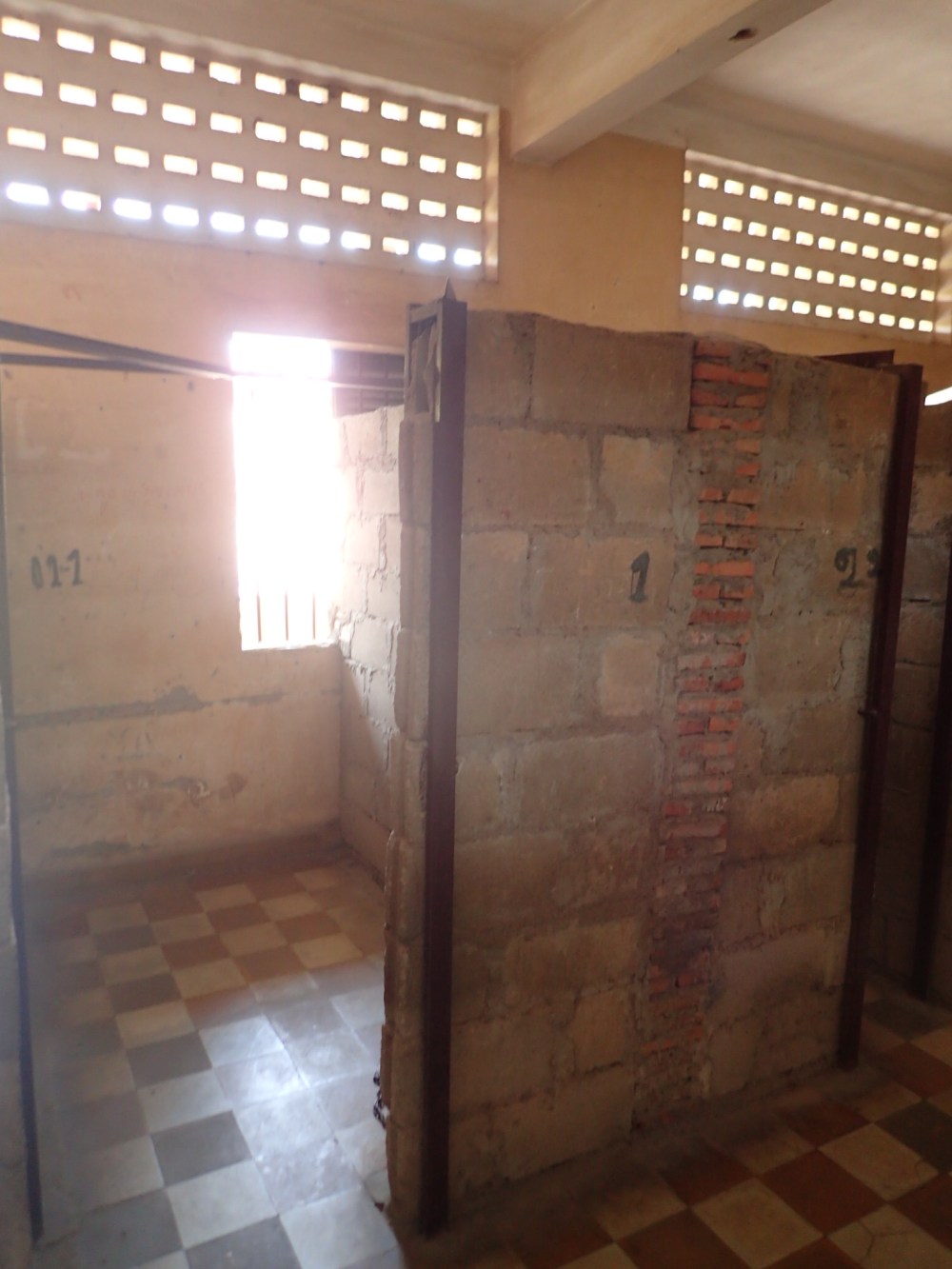
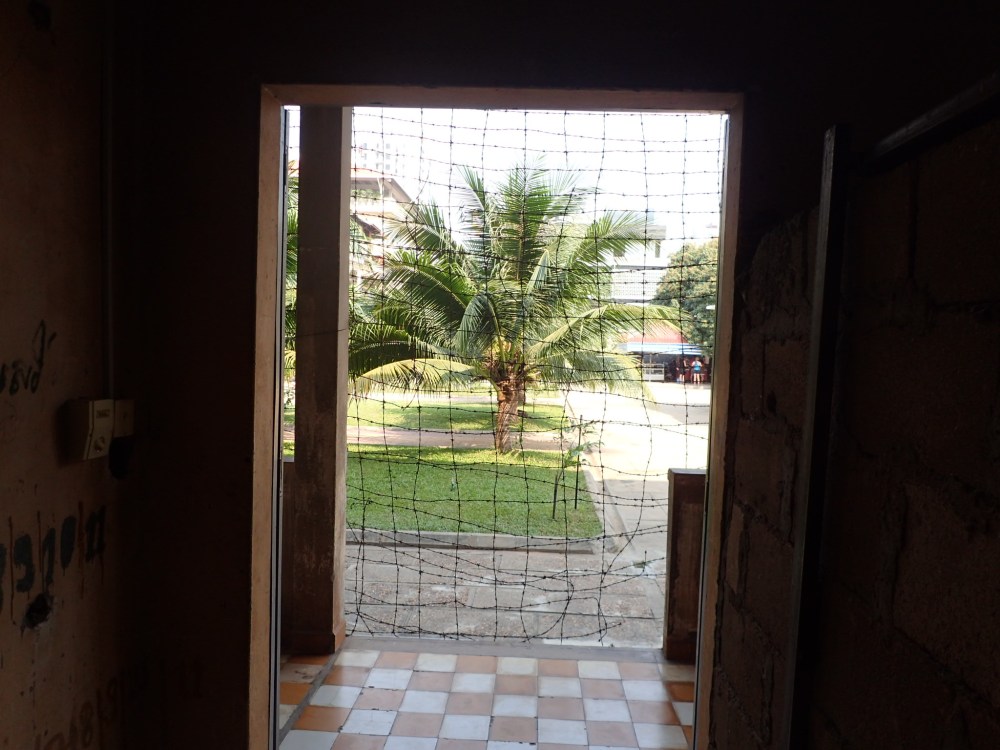

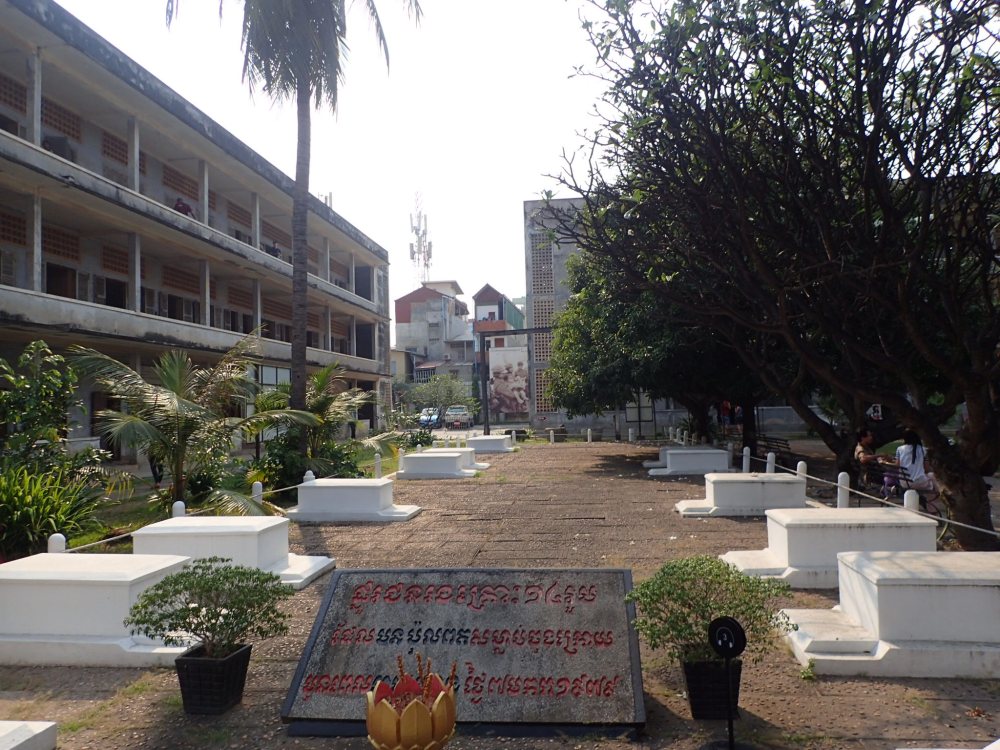
To turn a place of safety and learning into this… It was one more way they killed all that was “elite” and innocent.
Victims were Cambodians, foreigners, anyone tied to the government or the monarchy, the most highly educated, anyone who “looked” foreign, or anyone they decided to kill. Some were sent just for showing emotions not in line with what the new regime – “The Organization” – believed were necessary. A high-ranking member of the Khmer Rouge could easily (and very suddenly) be turned on by his peers and sent to his death. No one was safe.
 One example of this is the story of New Zealander Kerry Hamill. The fact that I cite his story over a Cambodian’s feels as strange as it may seem. But sometimes it takes a story like this to truly make something like this hit home. His story also brought a bit of levity in a strange way and is worth sharing. Anyway — Kerry was fulfilling his dream of sailing around the world when he accidentally entered Cambodian waters. He was captured, accused of being in the CIA, and eventually killed. What made his story unique though was who he named in his forced confessions. Colonel Sanders was listed as a superior officer, as well as General Pepper (thought to be a reference to the Beatles’ Sgt. Pepper which was popular at the time). He also discreetly wove in names of friends and family as final farewells.
His was just one story, and he was able to keep his fight alive throughout his imprisonment. But he was just one of many who suffered. S-21 saw approximately 14,000 prisoners. There were only 7 known survivors. Two of them were on site the day we visit selling their memoirs. Some of them have art on display in the museum depicting what life was like inside the prison. It was all haunting.
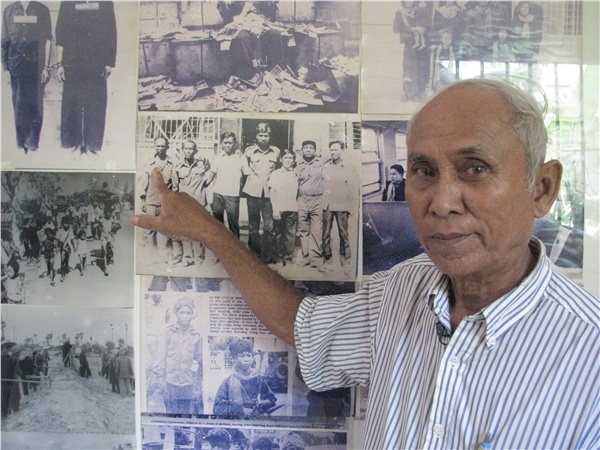
If you ever have the opportunity to visit this place, give yourself plenty of time (2-3 hours) and rent the audio guide. The stories preserved in that guide are powerful and informative.
—
The next day we visited the killing fields. Needless to say, it was an emotionally heavy couple of days. This where entire families were brought to be slaughtered discreetly. Remember “to kill the weed, you have to remove the roots” – meaning they would leave no survivors that could continue to “poison” society, or seek revenge later. And if they had any doubts, they felt it was better to accidentally kill the innocent than to accidentally let the guilty go free. So women, children, parents, siblings, cousins, etc… were all systematically killed and dumped mass graves. Some areas were specifically dedicated to women and children. To this day, bone and clothing fragments still surface.
The audio guide here also contains powerful stories I’m glad are preserved. Many of these stories will stay with me forever.
For more information on both of these sites, please visit KillingFieldsMuseum.com
 Brandon & Devon (BaD) Journey